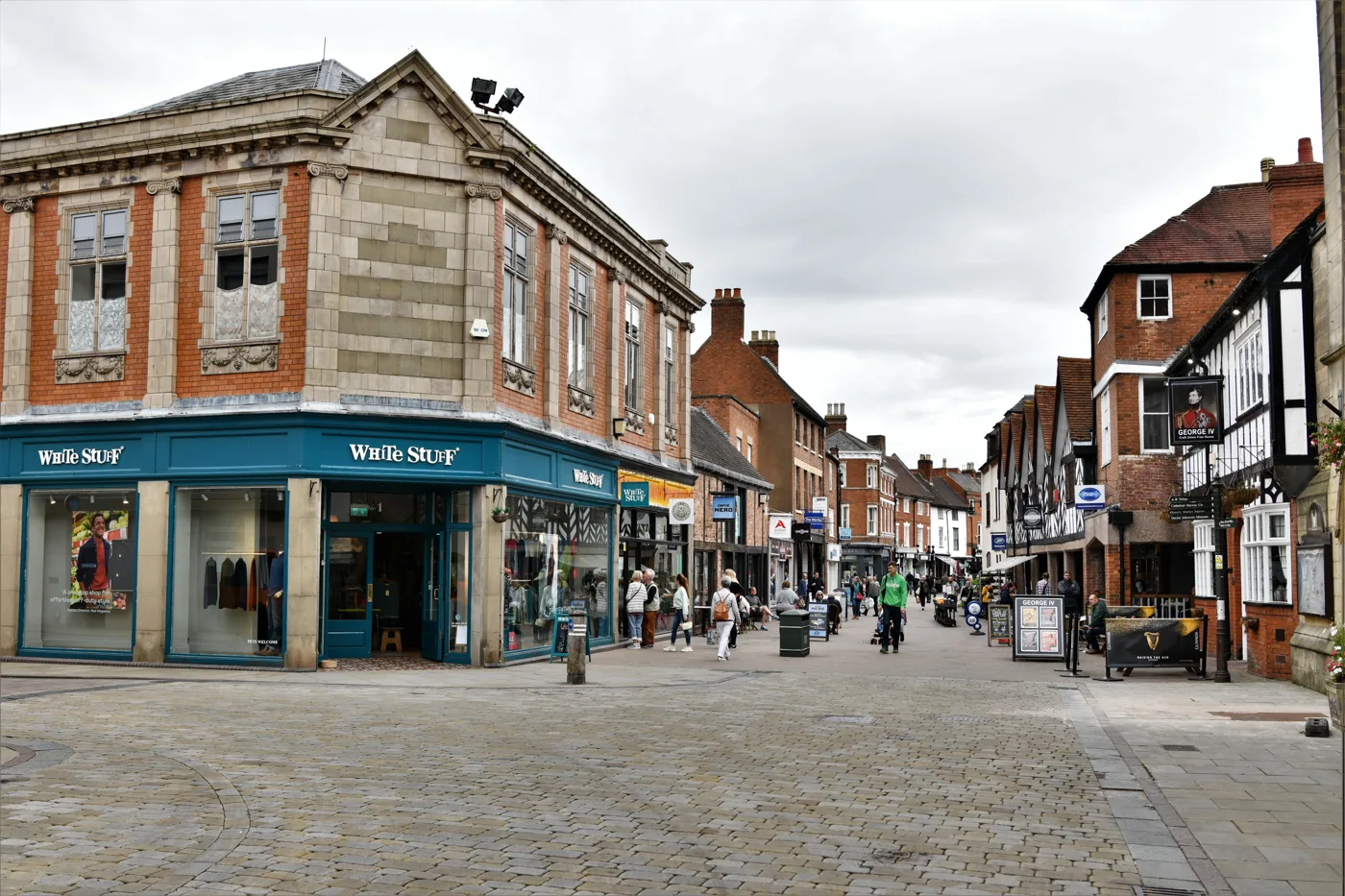

Lichfield District Council's £400,000 shopfront fund pays up to 75% of a full heritage rebuild. The guidance pack sets the three tiers, the excluded businesses and a 31 March 2028 cut-off.
Traders in Lichfield city centre can now apply for a share of a £400,000 pot to repair or rebuild their shopfronts, and the applicant guidance the council published alongside the scheme is more specific than the announcement was. Grants run to £30,000 and cover up to 75% of the cost, but only for the largest category of work, and the money is not first come, first served.
Lichfield District Council opened expressions of interest for its Heritage Shopfront Grant Scheme on 3 August, describing it as a chance for businesses and property owners to play their part in enhancing the city centre. The funding comes from the council’s own capital investment programme, which set aside £900,000 over two years when Cabinet backed the scheme in April.
The three tiers, and what you have to find yourself
The August 2026 applicant guidance pack sets out a tiered structure. The headline £30,000 applies only to a full heritage reinstatement.
| Project type | Examples given | Council share | Maximum grant |
|---|---|---|---|
| Full heritage reinstatement | Complete traditional shopfront rebuild, including full reinstatement of architectural features | Up to 75% | £30,000 |
| Partial restoration | Fascia replacement, stall riser reinstatement, repainting in a heritage palette | Up to 50% | £15,000 |
| Minor enhancements | Improvements such as signage and lighting | Up to 30% | £7,500 |
Source: Lichfield District Council, Shopfront Grant Scheme Applicant Guidance Pack, August 2026, section 4a.
Read the middle column as the bill you carry. A £40,000 traditional rebuild at the top tier still leaves £10,000 with the business. A £10,000 signage and lighting job in the bottom tier leaves £7,000, because the council’s 30% share caps out well below the headline figure most people will remember from the announcement.
Who cannot apply
The guidance excludes national chains, unless a heritage-sensitive case is operating as a local franchise. It also rules out residential properties, long-term vacant premises with no clear occupation strategy, businesses with unresolved enforcement issues, and any business found to be selling illegal goods or trading outside the terms of its licence.
Applications from agents or consultants are not accepted. The business or property owner has to apply directly. Leaseholders need written landlord consent, and the property must sit inside the Lichfield City Centre Conservation Area with a public-facing shopfront.
When the council first set the scheme out in March, it named Market Square, Bird Street, Market Street, Tamworth Street and Sandford Street as the focus. The guidance goes further and says priority may go to independent businesses, premises in identified priority areas including gateway locations, and heritage-sensitive buildings needing timely repair.
The rules that cost people money
Four points in the guidance are worth reading before anyone picks up a paintbrush or rings a joiner.
Work started before written approval cannot be funded. The scheme pays nothing retrospectively, and that includes costs already contractually committed. Commissioning detailed designs early is the specific trap: professional design fees are eligible only where the council has agreed them in writing beforehand.
Recoverable VAT is not covered. If the business can reclaim the VAT, that part of the cost is stripped out of the grant calculation.
Payment comes in arrears, by BACS, to a business account. Grants are paid against costs already incurred and paid, with invoices, receipts and photographs of the finished work required. Payments to personal or current accounts are not permitted.
The clock starts at the offer. Approved work must begin within six months and finish within twelve unless the council agrees an extension in writing, and a post-completion inspection follows.
A grant is also not a planning permission. Listed building consent, planning permission and any other statutory approval still have to be obtained separately, and the council will not release money until they are in place. If you want to see what else is being decided nearby, our Lichfield planning news page tracks current applications.
What it means for you
If you run or own a shop, cafe or bar inside the city centre conservation area, the first step is a short expression of interest with a description of the idea and photographs of the existing frontage. No drawings, no costings, no fees at that stage. The form and the guidance pack are on the council’s shopfront grant scheme page, and the regeneration team takes questions at shopfrontregeneration@lichfielddc.gov.uk.
Expressions of interest are considered on a rolling basis until 31 March 2028, but the council states it may close the scheme earlier if the funding is committed, and may introduce application windows if demand is high. The scheme is competitive and discretionary: meeting the criteria does not guarantee an award, and decisions are final with no appeal.
For everyone else, this is £400,000 of council capital aimed at a few hundred metres of street. What it buys, and whether the uPVC frames and oversized fascias the guidance singles out actually come off Bird Street and Tamworth Street, will be visible from the pavement long before any report is written about it.
Have your say