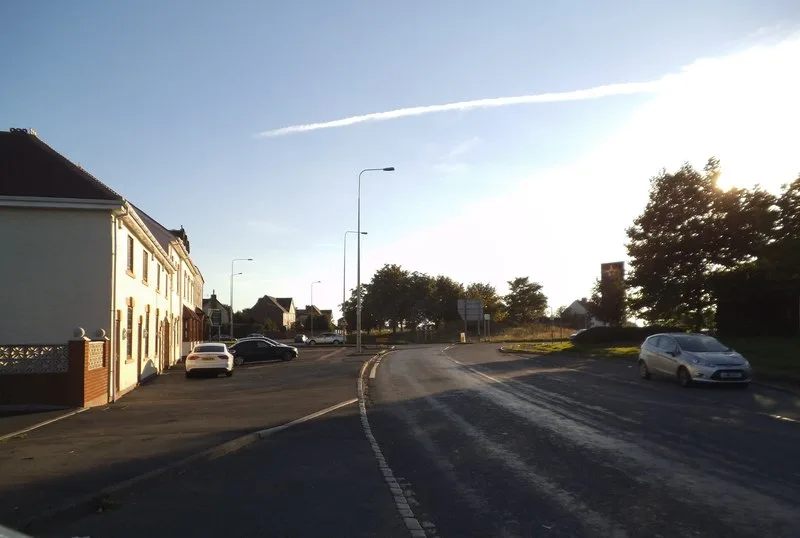

Work carried on at Muckley Corner after a temporary stop notice, the council says, and an enforcement notice is now being served. Breaching one is a crime.
Lichfield District Council served a temporary stop notice on privately owned land at Muckley Corner on the Saturday of the August bank holiday weekend. It now says work has carried on there in breach of it, and that an enforcement notice is being served.
The council set out the sequence on 4 September. Officers became aware of development on the land at about lunchtime on the Saturday. The notice was drafted and served that afternoon. The August bank holiday fell on Monday 31 August, so that Saturday was 29 August.
Muckley Corner sits on the district’s south western edge, where the A461 meets the A5 at a roundabout named in its own trunk road order. It is in Hammerwich parish, roughly three miles from Lichfield city centre.
What the notice prohibits
The council says the temporary stop notice barred further unauthorised activity on the land, and names three things in particular:
- engineering works
- the movement of material
- bringing additional caravans onto the site
Councillor Richard Cox, cabinet member for community and public protection, is quoted in the council statement saying the authority became aware of the development “around lunchtime on a Bank Holiday Saturday and formal action had been taken within hours”.
The council has not published the address, the site’s extent, who owns it or who is on it, and we are not going beyond what it has put on the record.
Why a temporary stop notice is the fast option
A temporary stop notice is the one planning tool a council can reach for the same day. It does not need a court, and it does not need the landowner’s cooperation. Under section 171E of the Town and Country Planning Act 1990, the authority can issue one where it thinks there has been a breach of planning control and that the activity should stop immediately.
Two features of it matter here.
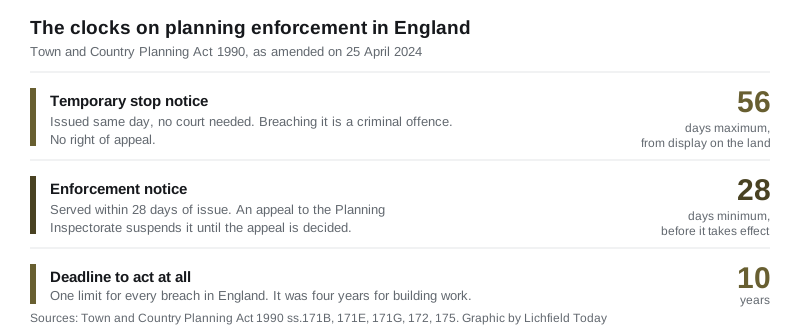
The first is the clock. In England the notice lasts a maximum of 56 days from the day a copy is displayed on the land, unless it is withdrawn or a shorter period is specified. That 56-day figure is recent: it was 28 days until the Levelling-up and Regeneration Act 2023 changed it on 25 April 2024. On the council’s account of when it acted, the notice would run into late October.
The second is that there is no appeal against it. A landowner cannot pause a temporary stop notice by lodging a challenge. Section 171H allows a compensation claim only in narrow cases, essentially where the activity turns out to have been lawful all along or the council withdraws the notice.
Breaching one is a criminal offence. Under section 171G a person is liable to a fine on summary conviction or on indictment, and the court “must have regard in particular to any financial benefit which has accrued or has appeared to accrue to the person convicted in consequence of the offence”. The defence is narrow: that the notice was not served on you and you could not reasonably have known it existed.
What an enforcement notice adds, and what it costs in time
The council says it is now serving an enforcement notice requiring the development to cease and the land to be returned to its previous state. That is a slower instrument than the stop notice, and deliberately so.
Section 172 requires a copy to go to the owner, the occupier and anyone else with a materially affected interest. It must be served within 28 days of being issued, and at least 28 days before the date it takes effect. So an enforcement notice issued this week could not bite before October.
Then comes the part residents usually find frustrating. If an appeal is lodged with the Planning Inspectorate, section 175 says the enforcement notice “shall be of no effect pending the final determination or the withdrawal of the appeal”. Enforcement appeals routinely take months.
The temporary stop notice is not suspended by that appeal. It is the reason the 56-day tool exists.
The council’s own guide is out of date on the deadline
If you read the council’s planning enforcement pages this week, the opening page tells you that enforcement action “must be taken within four years in relation to the erection of buildings, and within 10 years in relation to changes of use and breaches of planning conditions”.
That is the law as it stood before 25 April 2024. It is no longer the law in England. Section 171B now sets a single ten-year limit for all breaches in England, including building and engineering operations. The four-year limit survives only in Wales, and for anything in England that was already substantially complete before 25 April 2024, which the government spells out in its own guidance.
The distinction is not academic in a case like this one. Where the alleged breach is engineering works and a change of use, the council has ten years to act on anything done now, not four.
What it means for you
You can look enforcement cases up yourself. The council keeps a public enforcement notice register on the same portal as planning applications. Searching it for “Muckley Corner” on 7 September returned seven cases, all closed, the most recent from 2013. Nothing from this case had appeared. Registers lag, so that is what you would expect a week in, and it is worth re-checking rather than assuming nothing has happened.
Reporting a breach is confidential. The council’s guidance says the name and address of the person who reports an issue is kept confidential and not made public, with one exception: where formal action is being taken and that person has been asked to gather or give evidence towards a prosecution. Reports go through the council’s online form or to planenforcement@lichfielddc.gov.uk.
Some things are not enforcement matters at all. The council says it does not investigate boundary or ownership disputes, Party Wall Act issues, or covenants. Those are private legal matters.
Confirming compliance is a paid service. If you want the council to state in writing that an enforcement notice has been complied with, it charges £200 for the officer time.
Building without permission is not itself a crime. The council’s own guide is clear on this. What is criminal is failing to comply with a notice once one has been served.
We track applications and decisions across the district on our Lichfield planning news page, and current closures on the roadworks and travel page.
What we could not confirm
The council has not published the enforcement notice, the date it was issued, or the compliance period it sets. Nothing relating to the case had reached the public register as of 7 September. We have not established whether any planning application, retrospective or otherwise, has been made for the land: a search of the planning register for Muckley Corner returned ten applications, none of them for this site or this use.
Have your say